

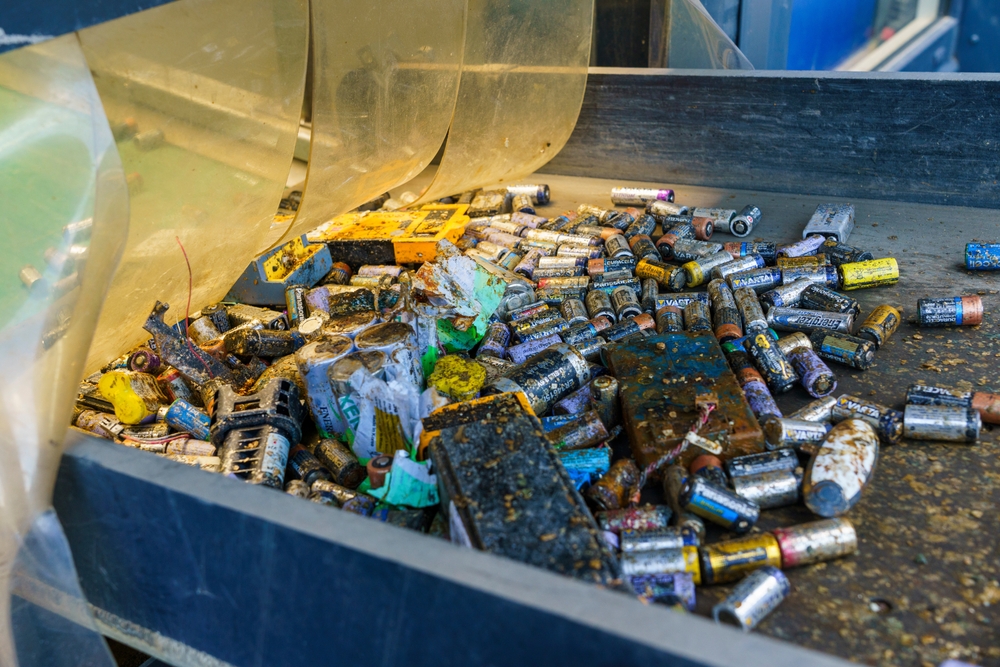
Lithium-ion batteries are powering the shift towards a more electrified world, from smartphones and laptops to e-bikes, power tools, electric vehicles and energy-storage systems.
But as these batteries reach the end of their useful lives, a growing safety challenge is emerging far from where they were manufactured or used.
Waste and recycling facilities are increasingly dealing with lithium-ion batteries that have entered waste streams where they were never designed to be handled.
When batteries are crushed, punctured or short-circuited during collection and processing, they can undergo thermal runaway — a rapidly accelerating process that can result in fire and the release of flammable gases.
The challenge is made more difficult by one simple fact: many batteries are effectively invisible until they become dangerous.
Why discarded batteries can still be dangerous
A lithium-ion battery does not become harmless when the device it powers stops working.
Even a discarded battery can retain stored energy, while physical damage to its cells can create the conditions for internal heating and thermal runaway.
This presents a particular problem for waste facilities. A battery concealed inside a consumer product may pass unnoticed into a recycling bin, collection vehicle, waste-transfer station or processing plant.
Machinery designed to sort, crush or process conventional waste can then inadvertently damage the battery.
The US Environmental Protection Agency has warned that municipal recycling facilities are generally not designed to handle lithium-ion batteries. An EPA analysis identified more than 240 lithium-ion battery-related fires at 64 waste-management facilities between 2013 and 2020.
The batteries involved came from a wide range of consumer products, including mobile phones, laptops, hoverboards and electronic cigarettes.
Recent incidents demonstrate that the risk remains significant.
In July 2026, London Fire Brigade responded to a fire at a waste-transfer facility in Southwark involving a lithium-ion battery inside a waste pile. Six fire engines and approximately 40 firefighters were required, and the incident took almost two hours to bring under control.
Weeks later, a damaged lithium-ion battery was blamed for a fire at a recycling facility in Ilford. Approximately three tonnes of recycling material and an industrial refuse compactor were destroyed, with surrounding fencing and trees also damaged.
These incidents highlight that lithium-ion battery fires are no longer solely a concern for battery manufacturers, EV operators or energy-storage facilities. They are becoming an operational challenge across the waste industry.
The hidden battery problem
One of the biggest difficulties facing waste operators is identifying batteries before they reach processing equipment.
Consumers generally recognise that loose rechargeable batteries require specialist disposal. However, many modern battery-powered products do not look like batteries.
Wireless headphones, toys, electric toothbrushes, cordless tools, e-bikes, vapes and laptops can all contain lithium-ion cells.
Once these products enter general waste or mixed recycling, identifying them can become extremely difficult.
The risk can develop through several stages.
A discarded device may be dropped, compressed or struck during collection. It can then enter processing machinery where additional mechanical pressure damages its casing or cells.
If that damage produces an internal short circuit, the battery can begin generating heat. Under the right conditions, the temperature can rise rapidly and trigger thermal runaway.
A single damaged battery can therefore become the ignition point for surrounding waste.
Why lithium-ion waste fires are difficult to control
Lithium-ion battery fires can present challenges that differ from conventional waste fires.
During thermal runaway, self-heating reactions inside the battery can accelerate as temperatures rise. This can cause individual cells to fail and potentially affect neighbouring cells.
The battery can also generate flammable gases during failure.
UK Environment Agency guidance published in 2026 identifies damage, short-circuiting, overheating and self-heating as important fire risks at waste-battery facilities. The guidance also highlights gas detection as a potential early-warning measure because gases released during battery failure can accumulate at different levels depending on their properties.
Once a battery ignites inside a large waste pile, firefighting becomes considerably more complicated.
The ignition source may be buried beneath tonnes of material, while other batteries could be distributed throughout the waste.
Putting out visible flames does not necessarily eliminate the underlying risk. Batteries can remain hot and potentially reignite, meaning waste operators and emergency services must also consider cooling, isolation and monitoring.
For recycling facilities, preventing a battery-related incident from escalating can therefore be just as important as responding once a fire has started.
Waste regulation begins to adapt
As battery-related incidents increase, waste facilities are being forced to reconsider how batteries are received, identified, stored and processed.
The Environment Agency’s 2026 guidance for permitted waste-battery facilities includes measures such as pre-acceptance checks, segregation of damaged batteries, dedicated quarantine areas and fire-resistant containers.
Larger damaged lithium-ion battery packs — including batteries from electric vehicles and battery energy-storage systems — can require specialised storage arrangements.
Depending on the facility and risk profile, fire-resistant and ventilated enclosures, together with appropriate detection and suppression systems, may be required.
Early detection is becoming particularly important.
Facilities can use combinations of smoke, heat, thermal and gas detection technologies to identify signs of battery failure before an incident develops into a major fire.
The goal is to detect instability early rather than waiting for visible flames.
Safer recycling starts before the recycling plant
There is an important difference between recycling a lithium-ion battery properly and placing a battery-powered product into an ordinary recycling bin.
Lithium-ion batteries contain valuable materials such as lithium, cobalt, nickel and manganese. Appropriate recycling can recover these materials and potentially reduce the need for additional raw-material extraction.
But the battery must first reach a facility capable of handling it safely.
When lithium-ion batteries enter conventional household recycling systems, they can introduce a significant fire risk into processes designed primarily for materials such as paper, glass, plastics and metals.
This means prevention has to begin before the battery reaches the recycling plant.
Consumers need convenient and clearly communicated disposal routes. Retailers and manufacturers can support collection programmes, while waste operators need suitable infrastructure, procedures and training.
Regulators also need to account for the rapidly increasing number of battery-powered products entering the market.
Battery fires are a supply-chain challenge
The waste industry is only one part of the wider lithium-ion battery safety challenge.
A 2026 analysis by the US National Institute of Standards and Technology found that lithium-ion battery fires are an increasing concern across the wider supply chain, including manufacturing, warehousing, transportation, waste disposal and consumer use.
The researchers also highlighted the fragmented nature of existing data, which can make it difficult to determine the full scale of the problem.
The issue is likely to become increasingly important as more batteries reach the end of their first useful life.
The global move towards electrification is putting more lithium-ion batteries into circulation — from small electronic devices to electric vehicles and large stationary energy-storage systems.
Eventually, all of these batteries will require collection, reuse, recycling or disposal.
The infrastructure responsible for managing them must be prepared for that growing volume.
Turning a fire risk into a recycling opportunity
The solution is not to move away from lithium-ion batteries.
These batteries remain important to electrification, electric mobility, portable electronics and energy storage.
Instead, the challenge is to develop a safer system around them.
That includes designing batteries and products with eventual dismantling and recycling in mind, improving battery identification and collection, separating damaged batteries before they reach processing equipment, and installing detection systems capable of identifying early signs of failure.
Consumer awareness is equally important.
A battery that reaches the correct recycling facility can become a source of valuable materials. The same battery placed into general waste can become an ignition source.
As the number of lithium-ion batteries in circulation continues to expand, the distinction between those two outcomes will become increasingly important.
The lithium-ion battery challenge does not necessarily end when a device reaches the end of its useful life. For the waste and recycling industry, that can be the point at which a new safety risk begins — potentially hidden inside an ordinary bag of waste.
