
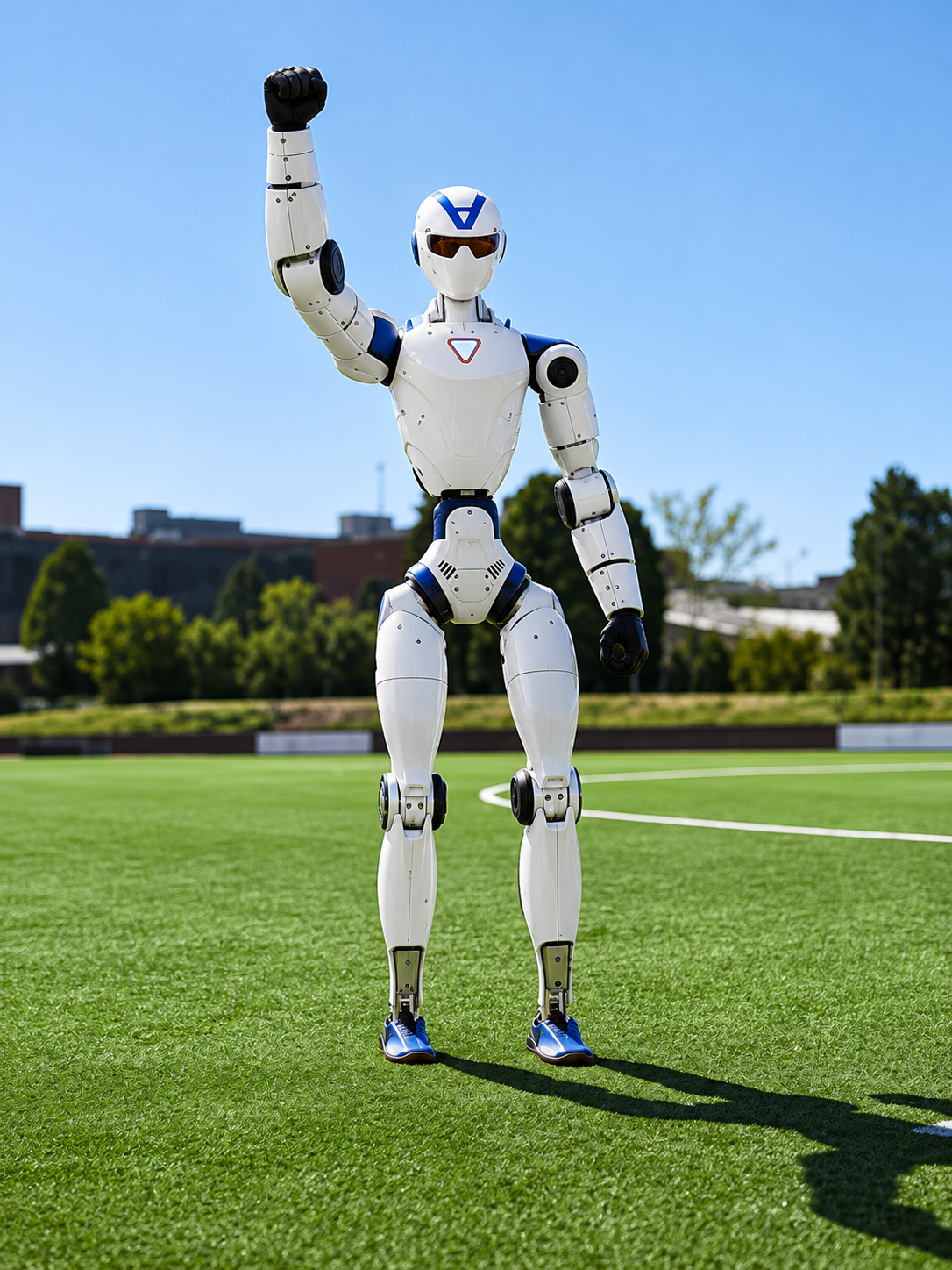
The Tshwane University of Technology (TUT) has introduced Nyiko, its second humanoid robot, as part of its ongoing investment in robotics research, artificial intelligence and technological innovation in South Africa.
Named after the Xitsonga word for “gift”, Nyiko is a Unitree R1 bipedal humanoid robot developed by Unitree Robotics. The robot joins TUT’s growing robotics collection, which already includes the Unitree G1 humanoid robot and a quadruped robotic dog named Dexter.
Through its AI Hub, TUT aims to use Nyiko as a platform for research, specialised skills development and the advancement of technologies that can address South Africa’s developmental challenges.
Expanding South Africa’s Robotics Research Capabilities
Nyiko provides researchers and students with an opportunity to explore humanoid robotics, intelligent systems and practical applications of artificial intelligence.
The university’s robotics initiatives are supported through the TUT AI Hub, the French South African Institute of Technology (F’SATI) and the South African Research Chairs Initiative (SARChI). These programmes contribute to building research capacity, developing experimental platforms and preparing skilled talent in robotics and related fields.
A key research focus is adaptive decision-making, which enables robotic systems to respond to changing tasks, operating environments and available resources.
This involves coordinating movement, perception, computing resources and behavioural responses while maintaining safety and operational effectiveness. Such capabilities are important for robots expected to function in complex real-world environments.
Supporting South Africa’s Technology and Innovation Agenda
TUT’s investment in humanoid robotics aligns with South Africa’s Science, Technology and Innovation Decadal Plan (2022–2032), which identifies artificial intelligence, robotics and other Fourth Industrial Revolution technologies as important drivers of industrial modernisation and economic development.
The plan aims to strengthen South Africa’s capacity to develop its own technological solutions rather than relying primarily on imported technologies.
By expanding its robotics research infrastructure, TUT is contributing to the development of local expertise in engineering, AI and intelligent robotic systems.
Nyiko Represents an Investment in Future Innovation
Beyond its role as a research platform, Nyiko represents an opportunity to expose students and researchers to emerging robotic technologies and practical experimentation.
The initiative highlights the growing role of universities in developing the technical skills and research capabilities needed to support South Africa’s digital and industrial transformation.
As robotics and AI continue to advance, TUT’s investment in platforms such as Nyiko could help create new opportunities for local innovation, knowledge development and the application of intelligent technologies across different industries.
