
CATL has introduced a new dual-battery system designed to improve the efficiency, flexibility and operating economics of electric heavy-duty trucks as the company expands its battery-swapping technology for the freight and logistics sector.
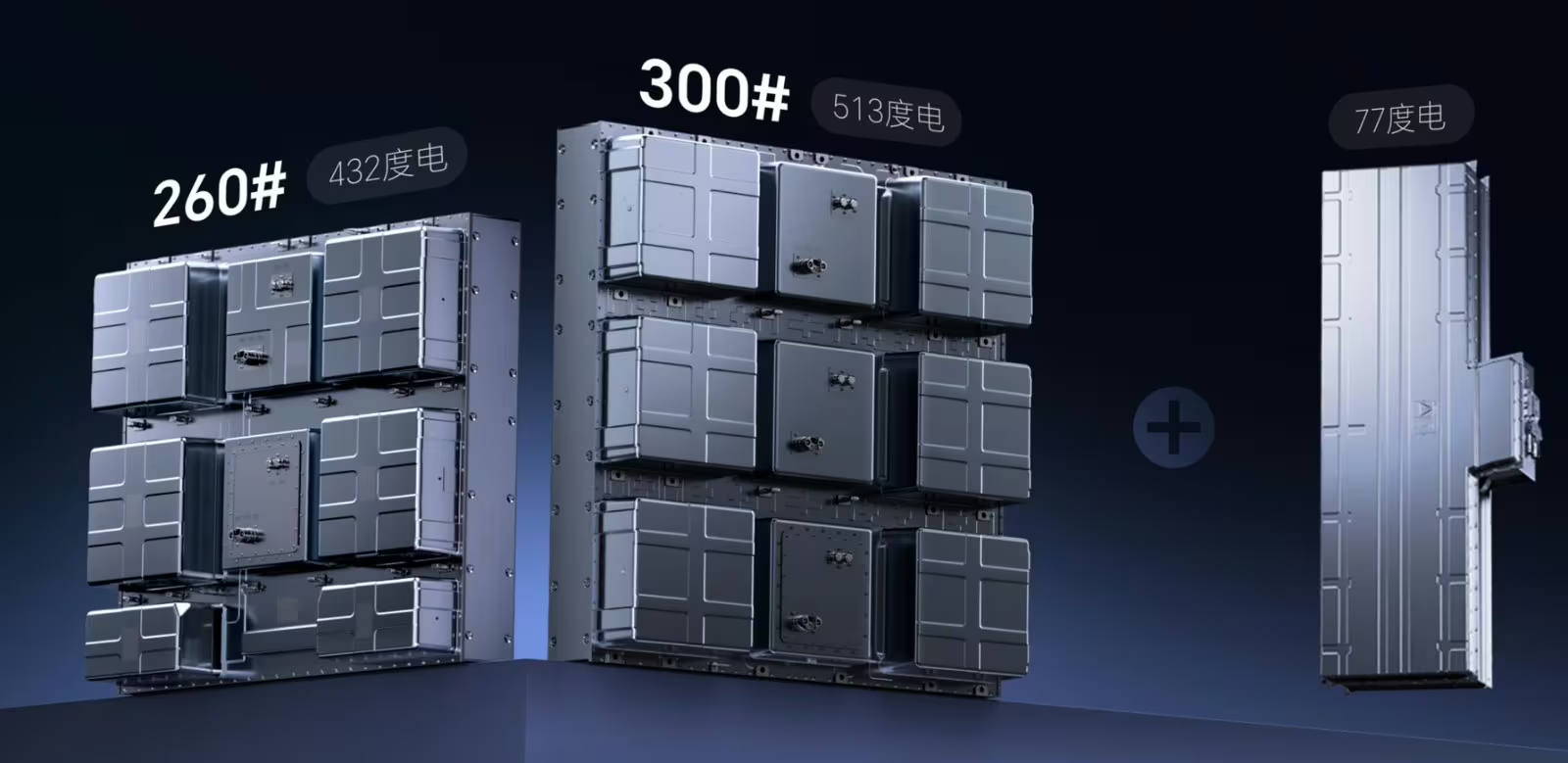
Unveiled in Beijing, the system combines a standardised, chassis-mounted swappable battery with an independent 77 kWh range-extension battery installed behind the truck’s cab. The development forms part of CATL’s broader strategy to accelerate the electrification of commercial transport.
The launch was accompanied by upgrades to the company’s Qiji battery-swapping network, including larger battery options, faster station deployment and changes to its battery-as-a-service (BaaS) pricing model.
Dual-Battery Architecture Improves Operating Flexibility
The new system uses two independent battery units to address operational limitations associated with conventional battery-swapping trucks.
The main battery is mounted on the chassis and designed to be compatible with CATL’s standardised Qiji battery-swapping network. The secondary 77 kWh battery provides additional range and backup power, supports 3C charging and remains with the vehicle.
According to CATL, conventional battery-swapping trucks typically return to swapping stations with approximately 30% battery charge remaining to reduce the risk of running out of power before reaching a station.
The additional battery allows the main battery’s depth of discharge to increase from approximately 70% to more than 95%. This means trucks can return to swapping stations with less than 5% charge remaining in the main battery, making greater use of their leased battery capacity.
CATL also says the system can switch power delivery to the range-extension battery within milliseconds, helping maintain uninterrupted operation and providing additional redundancy.
Flexible Battery Configuration and Upgrades
The system follows CATL’s 1+X architecture, allowing the main battery to remain standardised while the secondary battery can be customised for different operating requirements.
Depending on the application, the range-extension battery can be configured to prioritise low-temperature performance, high energy density or high power output.
The two battery systems can also be upgraded independently. While the range-extension battery remains with the vehicle, the main battery can be leased according to seasonal freight demand.
This arrangement could help logistics operators reduce battery rental expenses during periods when vehicles are less active.
Qiji Introduces Larger Batteries and Faster Swapping Stations
Alongside the dual-battery system, CATL introduced two additional standardised swappable battery options for heavy-duty trucks.
| Battery model | Capacity |
|---|---|
| Qiji 260# | 432 kWh |
| Qiji 300# | 513 kWh |
These batteries complement the company’s existing 75# model and expand the options available for different freight and transport applications.
CATL also announced improvements to its next-generation Qiji battery-swapping stations. The upgraded stations can complete a battery exchange in approximately five minutes while reducing construction costs by 10%.
The company says the new stations do not require excavation pits and can be deployed in as little as five days, potentially making network expansion faster and more cost-effective.
Revised Battery-as-a-Service Pricing
CATL has also changed its billing approach for its battery-as-a-service offering.
Instead of charging customers based on energy discharged, the revised model calculates costs according to net energy charged. This allows operators to retain the benefits of regenerative braking, which returns energy to the battery during vehicle operation.
According to CATL, the change can reduce per-kWh battery rental costs for customers on basic plans by up to 20%.
The adjustment is intended to improve the operating economics of electric heavy-duty trucks and make battery-swapping solutions more attractive to fleet operators.
CATL Targets 2,000 Heavy-Duty Truck Swapping Stations by 2027
CATL plans to have 900 heavy-duty truck battery-swapping stations operating by the end of 2026, increasing the network to 2,000 stations by 2027.
Its longer-term ambition is to establish 10,000 stations across China in partnership with other companies.
The company also reported agreements covering 13,000 vehicles at the launch event, including orders for battery-swapping products from major logistics operators such as SF Holding and China Postal Express & Logistics.
The development comes as electric heavy-duty trucks gain market share in China. According to China Passenger Car Association analysis of compulsory traffic insurance data, new energy heavy-duty trucks accounted for 50% of the segment in September 2026, compared with 29% during the same period a year earlier.
Strengthening the Future of Electric Freight Transport
CATL launched its Qiji heavy-duty truck battery-swapping solution in June 2023 and introduced its 75# standardised swappable truck battery in May 2025.
The company has also expanded its partnerships, including a strategic agreement with J&T Express to provide battery-swapping solutions, station equipment and operational support for more than 5,000 heavy-duty trucks.
Beyond the dual-battery system, CATL introduced additional battery solutions for different transport requirements, including ultra-light and ultra-thin packs mounted behind the cab, as well as chassis-mounted batteries for short-haul and long-haul operations.
As freight operators increasingly explore electric alternatives, CATL’s latest developments highlight the importance of battery-swapping infrastructure, flexible energy management and reduced operating costs in accelerating heavy-duty transport electrification.
