

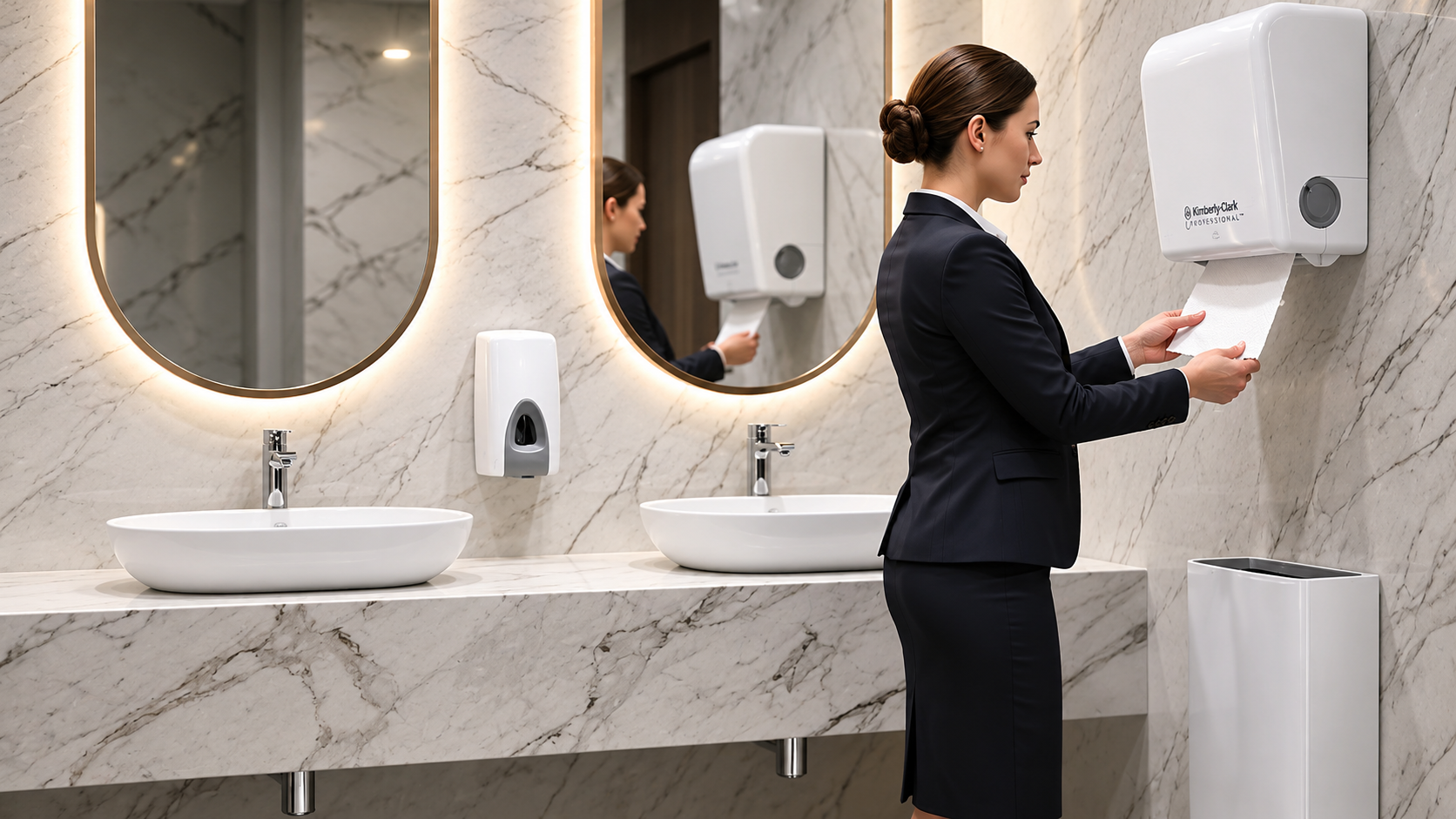
Commercial washroom standards are increasingly recognised as an important part of customer experience, brand reputation and facility management. From hotels and retail centres to corporate offices and hospitality venues, the condition of a washroom can influence how visitors perceive an organisation.
In an article published by CBN, Charl Broodryk, Director at Nuwkem Hygiene, the creators of Ticra®, highlights how neglected washroom facilities can undermine years of investment in branding and customer experience.
While businesses often prioritise reception areas, interiors and customer-facing spaces, washrooms can receive less attention despite being used by employees, clients and visitors throughout the day.
Hygiene Plays a Role in Brand Perception
A clean, well-maintained washroom communicates attention to detail and professionalism. Conversely, empty soap dispensers, poor-quality paper products, malfunctioning equipment and inadequate sanitary facilities can create a negative impression.
Research cited in the article, based on a global commercial restroom survey conducted by MetrixLab across the United States, Europe and Asia, identified cleanliness and hygiene as leading concerns among restroom users.
In hospitality and restaurant environments, an unpleasant washroom experience can also influence whether customers choose to return.
These experiences may not always result in direct complaints to management, but they can affect customer confidence and the reputation of a business.
Washroom Equipment Requires Deliberate Planning
Maintaining consistent standards involves more than routine cleaning. Businesses need to consider the quality, suitability and reliability of the equipment and consumables installed in their facilities.
Key considerations include:
- Appropriate dispensers: Paper and hygiene systems should match the level of usage and requirements of the building
- Reliable soap systems: Sealed soap dispensers can help reduce contamination risks associated with manual refilling
- Sanitary provision: Feminine hygiene facilities should form part of washroom planning
- Durability and design: Equipment finishes should suit the environment, whether a corporate office, hotel, retail centre or hospitality facility
- Maintenance and replenishment: Clear responsibility for servicing and restocking helps maintain consistent standards
A structured approach ensures that washroom facilities remain functional and presentable, even during periods of increased visitor traffic.
Nuwkem Hygiene Expands Commercial Washroom Solutions
Nuwkem Hygiene addresses these requirements through its Ticra® product range, supporting distributors and end users across South Africa, including Cape Town and the Western Cape.
Its solutions include controlled paper dispensing systems, automatic soap and sanitiser dispensers, touch-free sanitary disposal systems and different finishes designed for commercial and upmarket interiors.
These products are intended to support hygiene management while maintaining the functionality and appearance expected in professional facilities.
Preparing Facilities for Increased Visitor Traffic
The importance of commercial washroom management becomes particularly visible during busy periods. In Cape Town, the festive and summer seasons bring increased activity to hotels, retail destinations and other public-facing commercial facilities.
Higher foot traffic can expose weaknesses in cleaning schedules, consumable supply and equipment performance.
For property owners and facility managers, reviewing washroom standards ahead of these periods can help prevent avoidable service issues and protect the overall visitor experience.
Ultimately, washroom hygiene is not simply an operational requirement. It is part of how a business communicates its standards, attention to detail and commitment to the people who use its facilities.
