

Cleantech company Elonroad is testing a conductive charging system designed to allow electric heavy-duty cargo handling equipment to recharge while moving, potentially reducing charging downtime for ports and logistics terminals.
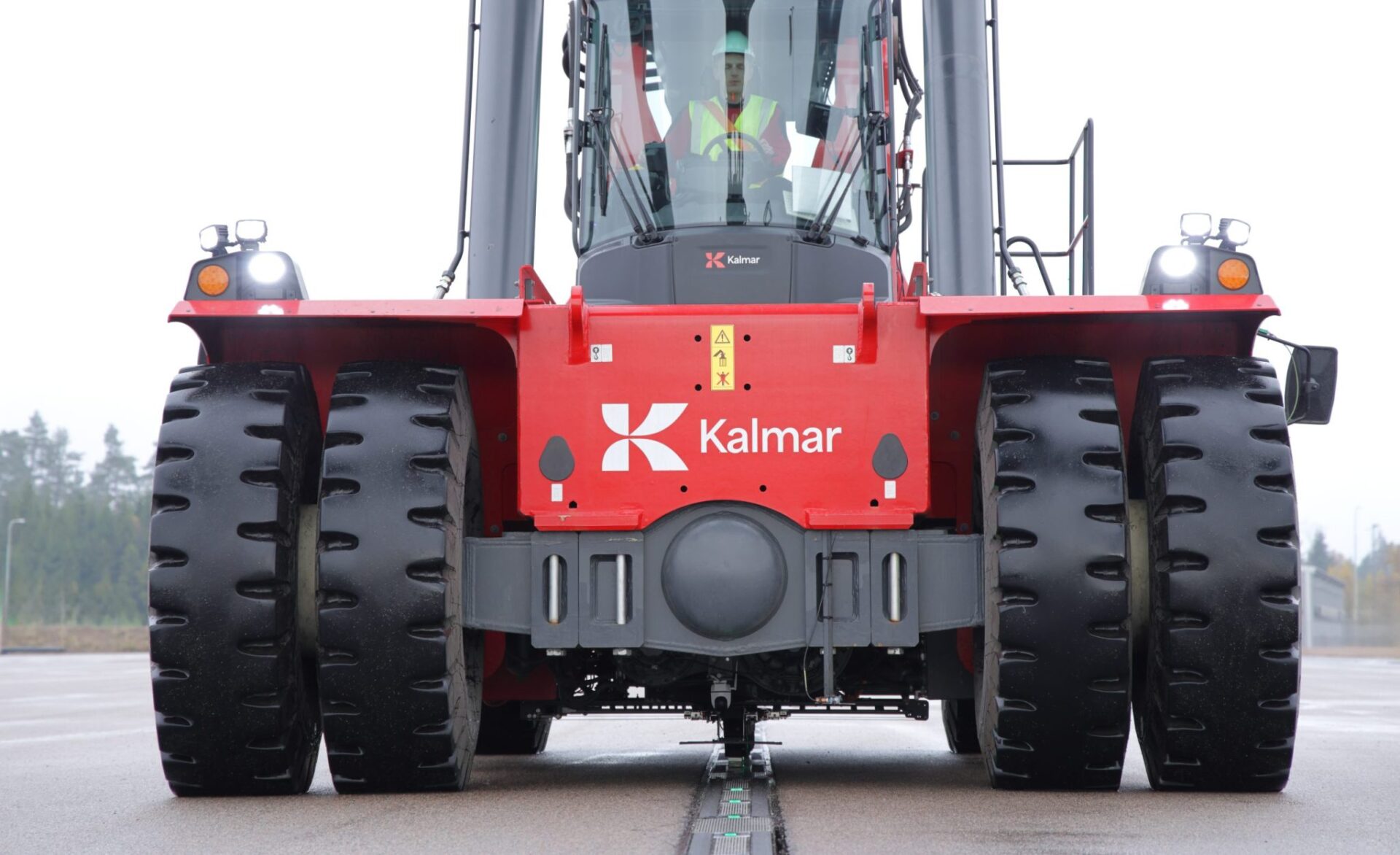
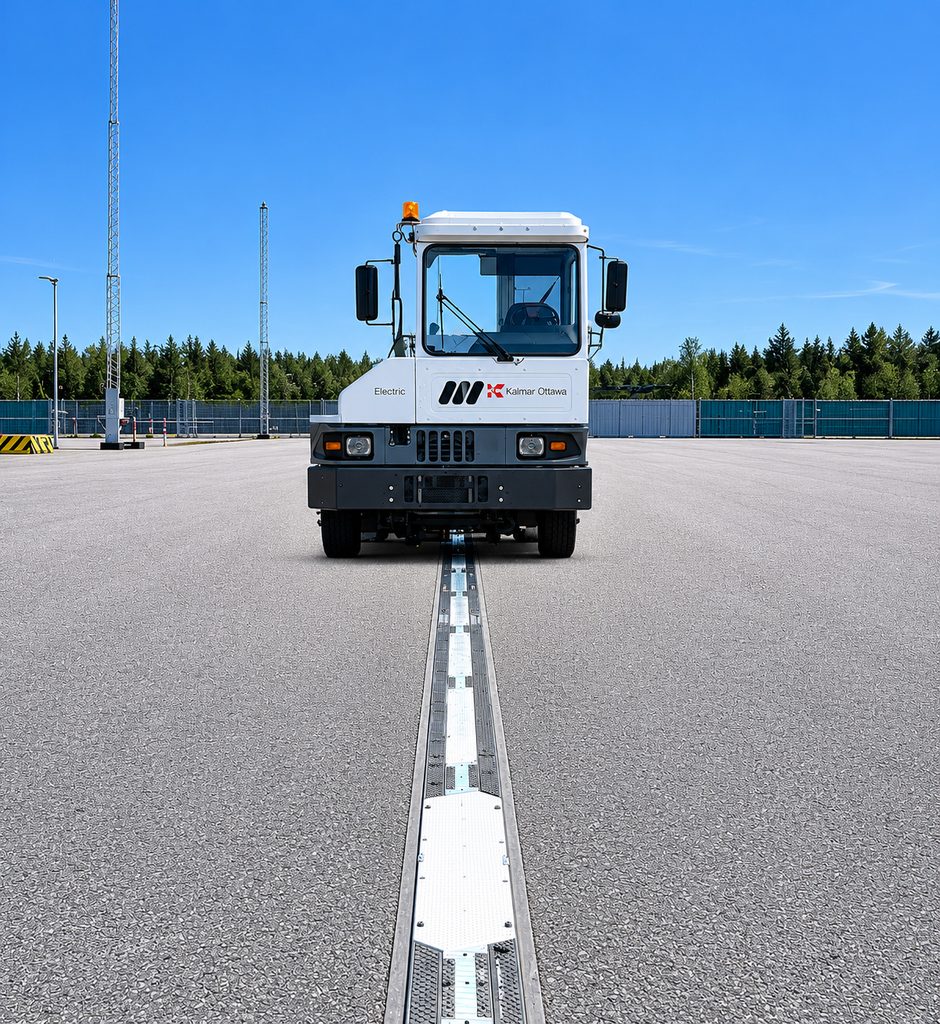
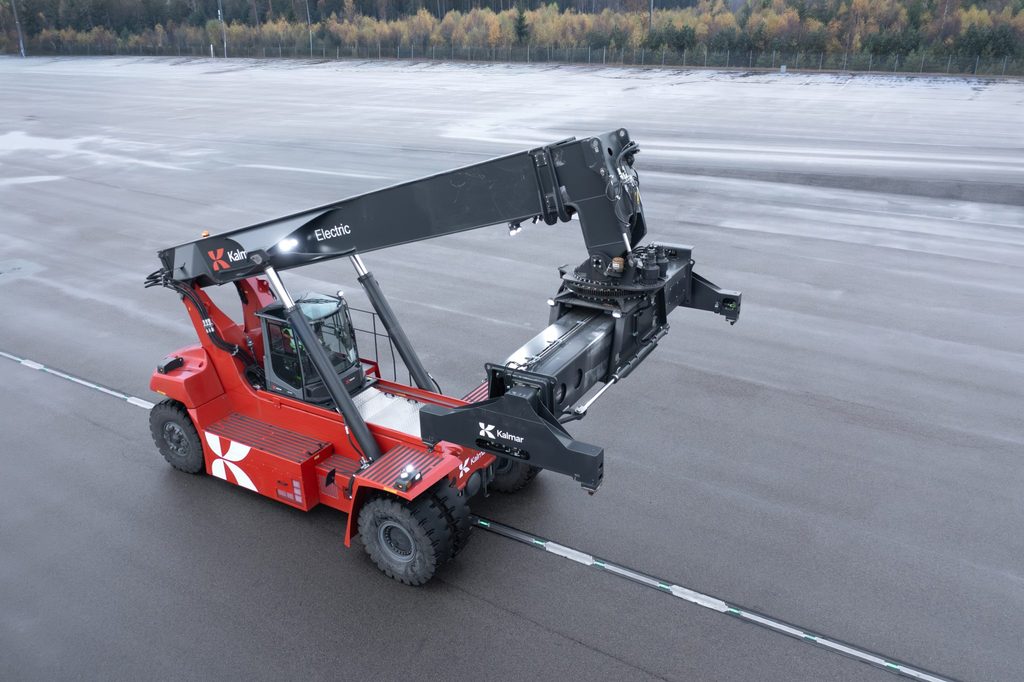
The technology is being demonstrated at Kalmar’s Innovation Centre in Ljungby, Sweden, using a Kalmar reachstacker and an Ottawa T2 EV terminal tractor.
The trial uses a 200-metre conductive rail to assess whether a shared charging system can support different types of electric cargo handling equipment while charging becomes part of normal vehicle operations.
Charging while vehicles are operating
Elonroad’s conductive charging system allows electric vehicles to receive power while driving over the electrified rail or while stationary along the charging section.
The approach is designed to increase vehicle availability by reducing the need for dedicated charging stops. This could be particularly valuable for terminal tractors and other cargo handling equipment operating on repetitive routes throughout a working shift.
Both vehicles involved in the trial have been equipped with Elonroad’s conductive energy collector, positioned underneath the chassis. The collector automatically engages with the charging rail as the vehicle moves across it.
The system can be integrated into different vehicle platforms without requiring major changes to the vehicle’s chassis, powertrain or battery system.
1 MW charging infrastructure
The demonstration rail is supplied by a 250 kW grid-connected power station and is divided into 20 independently controlled charging sections.
According to Elonroad, the system can support rail installations of up to 750 metres in each direction from a single power station, with charging capacity of up to 1 MW depending on the configuration.
The infrastructure can also be combined with battery energy storage, renewable energy systems and DC microgrids, providing potential integration options for electrified ports and logistics facilities.
The modular design allows the technology to be deployed for smaller charging zones and pilot projects before being scaled for larger commercial applications.
Supporting heavy-duty fleet electrification
The system is designed to support several types of electric cargo handling equipment, including terminal tractors, reachstackers and straddle carriers.
Elonroad said the charging rail can accommodate multiple vehicles simultaneously, while its conductive collector allows for lateral and vertical movement without requiring drivers to precisely position the vehicle over the rail.
This could make dynamic charging suitable for heavy-duty applications where vehicles need to remain operational for extended periods and where conventional charging stops can reduce productivity.
Potential for smaller batteries
Another potential benefit is the ability to reduce the battery capacity required by electric heavy-duty equipment.
Instead of relying exclusively on large battery packs to provide energy throughout a shift, vehicles could receive regular energy replenishment while operating along electrified routes.
Smaller batteries could potentially reduce vehicle weight and cost, although the appropriate battery capacity will depend on factors such as vehicle duty cycles, operating patterns and terminal layout.
Elonroad and Kalmar are using the trial to evaluate how dynamic charging can influence the relationship between battery capacity and vehicle productivity.
Testing reliability in demanding environments
The charging system is also being assessed under operating conditions representative of heavy-duty terminal environments, including exposure to rain, dust, salt, vibration and temperature variations.
The segmented rail architecture allows individual sections to be controlled independently. The system can deactivate an affected section if operating conditions create a potential electrical risk while allowing other sections to remain operational.
The replaceable contact shoe is designed as the main wear component and can be replaced as part of routine maintenance.
Moving towards commercial deployment
The Ljungby trial is focused on evaluating charging performance, vehicle availability, battery state of charge and the contribution of dynamic charging to normal operating cycles.
Elonroad and Kalmar plan to analyse the test data and publish a validation report later in 2026.
The results could help determine how conductive dynamic charging can be integrated into commercial heavy-duty equipment and larger port and logistics operations.
As ports and freight terminals continue to electrify their vehicle fleets, technologies that combine high vehicle utilisation with reduced charging downtime could become an increasingly important part of heavy-duty transport and cargo-handling infrastructure.
