

Tesla has increased its robotaxi fleet in Texas to 25 unsupervised vehicles, according to new data from the Robotaxi Tracker, marking a cautious step forward for a programme that has seen limited growth since its launch in mid-2025.
The fleet is currently spread across Austin, Dallas, and Houston, with the majority of vehicles concentrated in Austin. While the total number of vehicles—including those operating under supervision—is estimated to be between 45 and 50, Tesla has not officially disclosed detailed figures.
Gradual rollout across Texas cities
Expansion into Dallas and Houston remains limited, with both cities initially launching services with just one vehicle each in April before increasing to three units by month-end. In contrast, Austin continues to serve as the primary testing ground, accounting for the bulk of the fleet.
Despite this growth, the rollout remains modest compared to expectations previously set by Elon Musk, who had earlier suggested a far broader deployment timeline.
Scaling delayed pending next-gen FSD software
During Tesla’s latest earnings call, Musk confirmed that large-scale deployment of fully unsupervised robotaxis will be delayed until the release of Full Self-Driving (FSD) version 15.
The upcoming software update is expected to introduce a major architectural overhaul, but is unlikely to arrive before late 2026 or early 2027. The delay reflects ongoing challenges in achieving reliable, safe autonomous driving at scale.
Musk also noted that the current Hardware 3 platform—used in many Tesla vehicles—lacks the computational capability required for unsupervised operation, and would need significant hardware upgrades to meet future requirements.
Safety concerns remain a key challenge
The fleet’s expansion comes amid scrutiny over its safety performance. Between June 2025 and January 2026, Tesla’s Austin-based robotaxi service recorded 14 crashes over approximately 800,000 miles of operation.
This equates to roughly one incident every 57,000 miles—significantly higher than the average rate for human drivers in the United States. Notably, all incidents occurred with safety monitors present in the vehicles.
Tesla’s reporting practices have also drawn attention, as narrative details in crash reports submitted to the National Highway Traffic Safety Administration are redacted, limiting independent analysis of incident causes.
Intensifying competition in autonomous mobility
While Tesla works toward scaling its robotaxi operations, competitors are advancing rapidly.
Waymo, for example, operates more than 3,000 autonomous vehicles across multiple US cities and completes over 500,000 paid rides weekly. The company has also secured significant funding to support international expansion into markets such as London and Tokyo.
Meanwhile, AVride—backed by Nebius—has deployed around 200 autonomous vehicles in Texas and is already offering rides through the Uber platform in Dallas. Other players, including Zoox, continue to advance their own autonomous mobility solutions without relying on supervised deployment phases.
Manufacturing progresses ahead of deployment
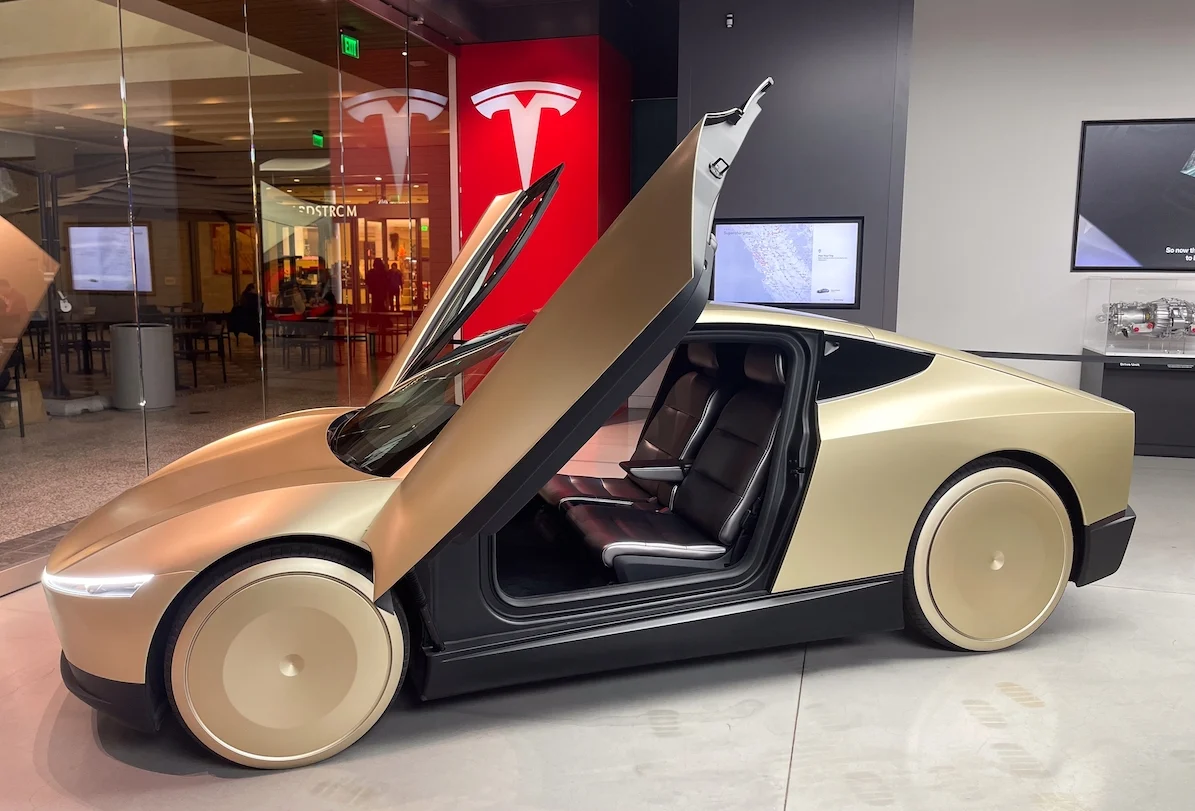
On the production side, Tesla is making strides with its purpose-built autonomous vehicle, the Cybercab. The two-seat vehicle, designed without a steering wheel or pedals, is already in production and reportedly capable of navigating autonomously within factory environments.
However, the gap between manufacturing readiness and real-world deployment remains significant, particularly as regulatory, technical, and safety challenges persist.
Long road to commercial viability
Despite ongoing development, Musk has indicated that Tesla’s robotaxi business is unlikely to generate meaningful revenue before 2027.
As the company continues to refine its technology and expand its fleet, the success of its robotaxi ambitions will depend on overcoming safety concerns, achieving regulatory approval, and keeping pace with rapidly advancing competitors.
For now, Tesla’s robotaxi programme remains a work in progress—promising in concept, but still some distance from large-scale reality.
