

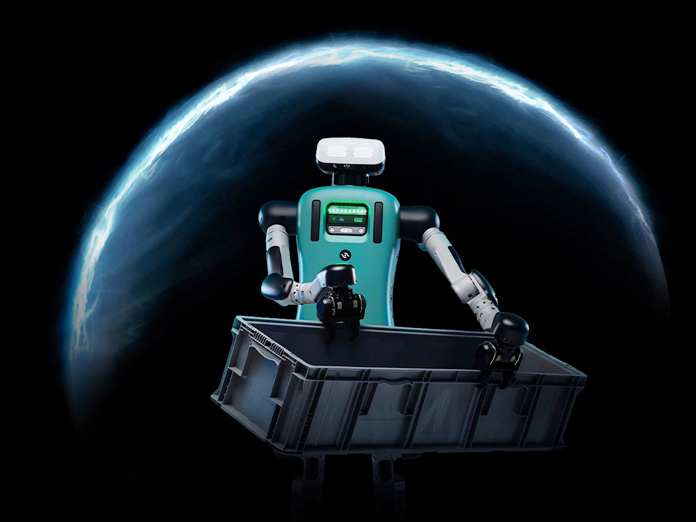
As Africa’s manufacturing, logistics and warehousing sectors increasingly adopt robotics and autonomous systems, ensuring safe collaboration between humans and machines is becoming a top priority. Advances in artificial intelligence are enabling robots to perform more complex tasks, but they also require intelligent safety systems capable of adapting to dynamic industrial environments.
To address these challenges, FORT Robotics has expanded its Physical AI safety platform by joining the NVIDIA Halos for Robotics ecosystem, introducing advanced safety technologies designed to improve both operational efficiency and workplace safety.
The company recently showcased its latest Outside-In Safety application at the Automate Conference in Chicago, demonstrating how intelligent infrastructure can enhance the safe operation of autonomous robots in industrial environments.
Built using the open-source NVIDIA Halos Outside-In Safety Blueprint, the solution extends a robot’s awareness beyond its onboard sensors by incorporating external cameras, infrastructure-based sensors and AI-powered visual agents. This broader environmental awareness enables robots to make more informed decisions while operating safely alongside human workers.
Powered by NVIDIA IGX Thor and the NVIDIA Holoscan Sensor Bridge, the system combines high-performance AI computing with advanced sensor connectivity, allowing autonomous robots to continuously monitor their surroundings and dynamically adjust their behaviour in real time.
Unlike conventional safety systems that rely solely on sensors installed on the robot itself, the Outside-In Safety approach creates an additional layer of environmental intelligence. This allows robots to maintain higher operating speeds where conditions permit while automatically slowing down or adjusting movement when people or obstacles are detected nearby.
The result is improved productivity without compromising workplace safety.
For industries such as manufacturing, warehousing, mining and logistics—which continue to expand across Africa—this technology offers significant opportunities to improve automation while protecting employees working alongside autonomous equipment.
The platform also supports greater return on investment by enabling businesses to use existing infrastructure, including facility-mounted cameras, as part of their robotic safety systems. According to FORT Robotics, this approach can improve operational efficiency across applications such as warehouse automation, truck unloading, inventory management, product assembly and material handling.
As autonomous systems become more widespread, compliance with international safety and cybersecurity standards is also becoming increasingly important.
FORT Robotics is a member of the NVIDIA Halos AI Systems Inspection Lab, the world’s first ANSI National Accreditation Board (ANAB)-accredited inspection facility dedicated to physical AI and autonomous systems. The laboratory provides a unified framework for verifying functional safety, cybersecurity and AI compliance across robotics, autonomous vehicles and intelligent sensor technologies.
Commenting on the collaboration, Samuel Reeves, Chief Executive Officer of FORT Robotics, said safety remains the foundation for large-scale robotics deployment. He noted that combining FORT’s safety technologies with NVIDIA’s AI-powered perception capabilities enables robots to better understand their surroundings, respond intelligently to changing conditions and operate more productively without compromising worker safety.
The enhanced platform builds upon FORT’s existing Trust Layer for Physical AI, which already provides safety-certified hardware and software for autonomous systems.
The expanded platform now incorporates three complementary safety capabilities: Outside-In Safety, which uses external infrastructure sensors to optimise robot performance; Onboard Active Safety, which enables robots to detect and respond to hazards using onboard perception systems; and Human-in-the-Loop Control, which allows trained operators to safely monitor, remotely control or intervene when required.
As Africa accelerates investment in smart factories, automated warehouses and intelligent industrial infrastructure, advanced AI safety platforms will play a vital role in ensuring autonomous systems operate safely, efficiently and in compliance with evolving international standards. Technologies that combine artificial intelligence with functional safety are expected to become essential components of the continent’s next generation of industrial automation.
